
120 Adelaide St. West
Suite 2500
Toronto, Ontario M5H 1T1
T: (416) 252-3441


EN
As dusk falls earlier on crisp autumn days, a breakdown or minor fender-bender on a poorly lit shoulder can quickly turn from an inconvenience into a high-stress situation. Predatory tow operators and dishonest auto body shops may exploit this roadside anxiety through insurance fraud for financial gain.
These types of fraud may be done in collusion with a network of individuals or organizations. For example, the auto repair facility may conspire with the tow truck company to provide inflated fees for services in exchange for kickback payments.
As part of Équité Association’s Fortifying Your Fall Fraud Defences campaign, this article will outline how to identify predatory practices and how you can prevent becoming a victim of these incidents.
Why Fall Increases Roadside Fraud Risks
Autumn weather introduces specific road hazards that lead to a seasonal spike in collisions, creating more opportunities for predatory operators to target vulnerable drivers:
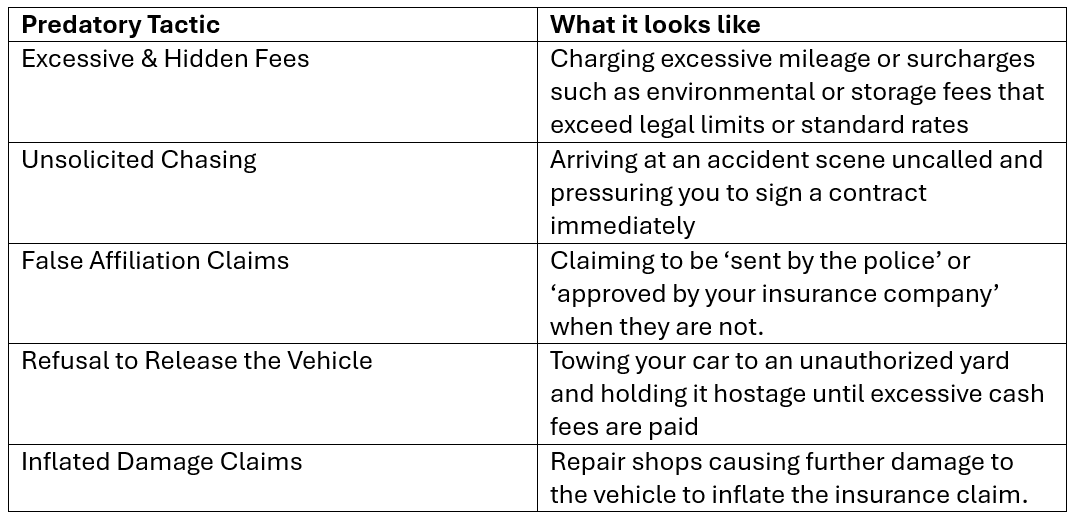
Red Flags: Identifying Predatory Practices
Predatory operators use deceptive tactics to profit off drivers in distress. Money generated from these fraudulent insurance claims and billing practices directly support organized crime networks to fund international terrorism, guns and drugs.
How to prevent becoming a victim of predatory tow andauto repair incidents
Auto repair fraud and predatory towing may also be connected to staged collisions or accident benefits fraud. These types of fraud are not a victimless crime; they result in higher premiums for drivers and impacts public safety in Canadian communities.